Netanyahu holds security assessment at IDF Central Command
Source: Israeli Prime Minister's Office
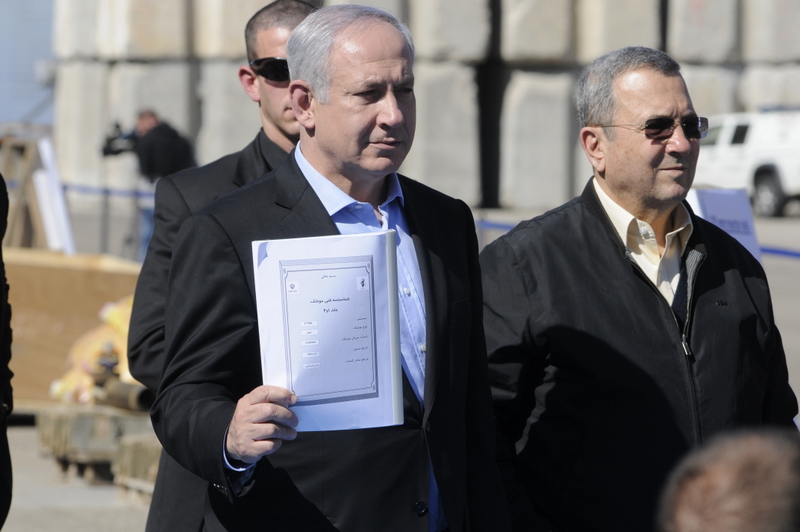
Good, found solid coverage. Let me pull details from the most relevant articles.Good, I have URL and title data. Now let me extract full content fields for the most relevant items.I have excellent detailed coverage now. Let me write the article.Prime Minister Benjamin Netanyahu convened a security assessment on Monday at IDF Central Command headquarters to review escalating threats in the West Bank, according to a statement from his office cited by the Times of Israel. The prime minister's office said the meeting focused on "the security challenges" facing the territory, which Israel refers to as Judea and Samaria, and came as tensions in the area have climbed sharply in recent weeks.
According to the Times of Israel, the discussion was attended by Defense Minister Israel Katz, IDF Chief of Staff Lt. Gen. Eyal Zamir and National Security Council head Shmuel Ben Ezra, as well as the heads of the military's Central Command, Military Intelligence Directorate, Operations Directorate and West Bank Division. Israel National News similarly reported that the prime minister held the assessment to address security challenges in the region, with the same senior officials taking part.
The Jerusalem Post and Yahoo News both reported that the assessment followed recent outbreaks of violence in the West Bank at several flashpoints, including Kusra and Gilad Farm near Nablus, as well as Yatta and Sa'ir near Hebron. The Times of Israel noted that the gathering also came a day after an Israeli man was moderately wounded in a stabbing attack near the Palestinian village of al-Auja in the Jordan Valley.
Citing two unnamed Israeli sources, the Jerusalem Post reported that Zamir had warned Netanyahu in recent discussions that, given conditions on the ground, "there is a risk of an explosion in the West Bank." The outlet also reported that Central Command chief Maj. Gen. Avi Bluth briefed officials that while Palestinian terror attacks have significantly declined, incidents of Israeli violence against Palestinians have risen substantially over the same period.
The Times of Israel, citing a Channel 12 report, said Bluth told Netanyahu and other senior officials that despite the drop in Palestinian terrorism over the past two years, "there is one match that could ignite everything in an instant – nationalist crime." Bluth reportedly added that the military's attention is being repeatedly diverted toward such incidents instead of counterterrorism work. According to the same Channel 12 account relayed by the Times of Israel, Netanyahu then pressed Zamir on what the military's plan would be if the West Bank erupted, and the chief of staff replied that officials "did not come prepared to present that at this meeting."
The Jerusalem Post reported that Bluth's remarks referred to a broader trend: a marked decline in the number of Israelis killed and wounded in Palestinian attacks alongside a substantial increase in incidents of settler violence against Palestinians, even as Central Command has managed a partial reduction in such incidents since a peak in March that coincided with the U.S.-Israeli military campaign against Iran. The meeting also touched on what the Jerusalem Post described as a "dramatic increase" in Israeli settlement activity in the territory.
Monday's session followed a period of heightened friction in the West Bank. The Jerusalem Post previously reported that Netanyahu ordered a crackdown after two Israelis were killed in a shooting attack near a settlement in late July, at which point he and Katz announced measures including demolishing the suspected attacker's home, expanding counterterrorism operations in villages described as "hotbeds of terror," reinforcing IDF deployments, and establishing additional checkpoints. At the time, Netanyahu said, "We will act strongly against terrorists and their proxies, and we will not allow terrorism in Judea and Samaria to raise its head," according to the Jerusalem Post.
The Jerusalem Post also reported that, separately from Monday's Central Command meeting, members of Israel's Security Cabinet were set to convene the same evening against the backdrop of regional developments, including a strike on a Syrian air base, and were expected to hear further warnings from Zamir and other military officials about the volatility of the West Bank situation.
Neither the prime minister's office nor the outlets covering the meeting detailed specific operational decisions taken during Monday's assessment, and it remains unclear whether additional high-level security consultations on the West Bank are planned in the near term. The reported exchange between Netanyahu and Zamir over the lack of a prepared contingency plan suggests the government may face pressure to formalize its response options should tensions continue to rise.