Treasury Secretary announces "economic D-Day" campaign against Iran
By the BreakFirst Newsroom
Source: US Treasury Secretary
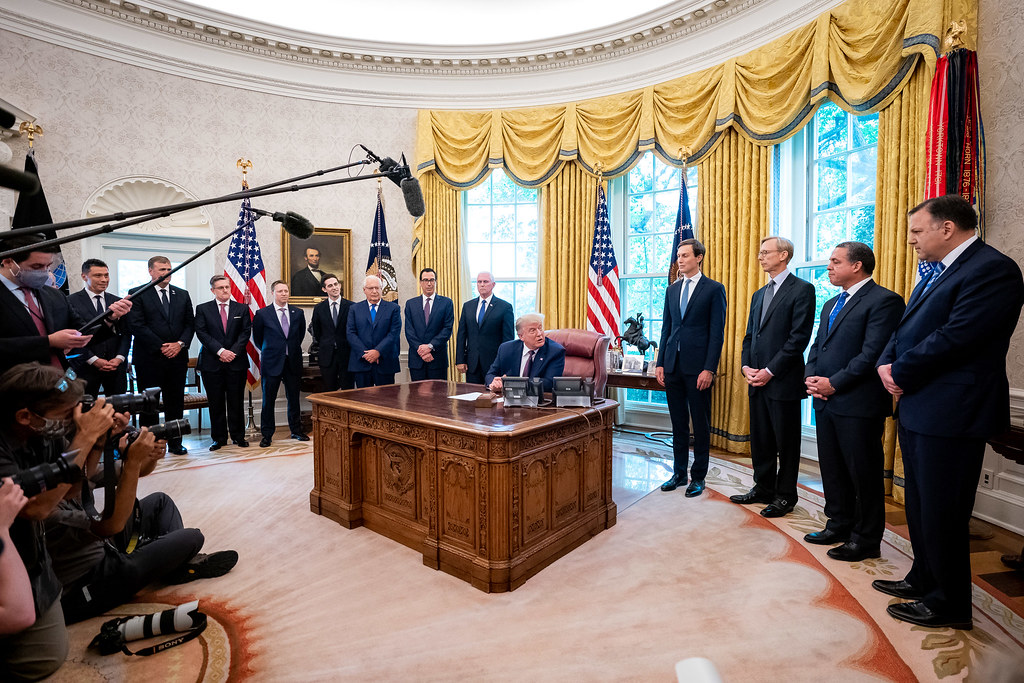
US Treasury Secretary Scott Bessent has launched what he is calling an "economic D-Day" against Iran, and outlets covering the announcement report the campaign now has a name, a target list and an early round of designations — along with an Iranian response that the initial brief said had not yet come.
According to The Hill, Bessent previewed the offensive in a social media post on Sunday, writing that the United States has "dismantled Iran's capabilities, destroyed nearly 100 percent of its military factories, and buried its nuclear program," and that Washington is "now entering the endgame." The Hill reported he added that "at dawn begins an economic D-Day — the single greatest financial offensive ever marshaled against an adversary," and that the operation would "leverage every agency, every authority and action many assumed we would never summon." Fox Business reported the same language appeared in a Financial Times opinion piece published Sunday, in which Bessent warned that "any nation that serves as a financial artery of a withering regime should expect to share in its isolation."
CBS News reported that Bessent formally unveiled the campaign at a Treasury Department news conference on Monday under the name Operation Economic Outcast, framing it as an effort to reopen the Strait of Hormuz and end the war. CBS quoted him invoking the 1944 Normandy landings, saying that D-Day marked the start of an allied campaign to drive the enemy from its positions "including those in third countries," and that the U.S. was launching an "economic onslaught against Iran's financial connections around the globe."
On the substance, UPI reported the package expands the categories of conduct that can trigger secondary sanctions, blacklists nearly 60 entities, individuals and vessels, suspends several previously issued general licenses and warns other governments about the risks of dealing with Tehran. Fox Business reported the measures reach into Iran's digital assets, technology, gold, aviation and shipping sectors. NPR reported that a Treasury statement described one target as a network of brokers, companies and "shadow fleet" vessels operating across the United Arab Emirates, Hong Kong, China, Singapore, Switzerland and Europe to move Iranian oil and channel revenue to the Islamic Revolutionary Guard Corps' Qods Force. Axios reported that Treasury also suspended licenses that had permitted certain payments to Iran and Iranian access to U.S. cultural and academic institutions.
Several outlets cast the rollout as more restrained than the rhetoric. CNN reported that Bessent himself called Monday's announcement a "warning shot," and noted that Washington is threatening sanctions on countries that refuse to cut ties with Iran but has stopped short of imposing major new penalties. NPR made a similar point, reporting that unlike the wartime landing Bessent invoked, the U.S. is giving countries time to change course before major action. Axios reported that the U.S. already has substantial secondary sanctions on Iran's oil trade but has only partially enforced them, and that success would require confronting trading partners such as China, Russia, India, Pakistan, Qatar and Turkey.
Iranian officials have now responded publicly. Al Jazeera reported that Foreign Minister Abbas Araghchi dismissed the campaign on X with the line "Same bull. Different bullies," alongside a screenshot referencing 2012-era sanctions. NPR reported that Mohsen Rezaei, secretary of Iran's Supreme National Security Council and a former Revolutionary Guard commander, said on state television that Iran would retaliate in a "seismic manner" and warned Gulf states that any country joining the restrictions would be treated as an enemy. CNN reported that Finance Minister Ali Madanizadeh said Tehran was "fully prepared" to counter the measures, while negotiator Mohammad Bagher Ghalibaf brushed the threats off. Common Dreams reported that Iranian official Kazem Gharibabadi argued Bessent's account "doesn't add up," questioning why a supposedly dismantled Iran would require the largest financial assault in history.
The backdrop, as CNBC reported, is a war now in its sixth month, with both sides having missed a 60-day ceasefire window that closed off the formal truce mechanism. CNBC also reported Tehran has threatened to seize vessels violating its transit rules in the Strait of Hormuz. The Associated Press, cited by The Hill, reported the rial fell to a record low of about 2.02 million to the dollar on Monday. Time reported Brent crude closed near $92 a barrel, below a wartime high of roughly $120.
As for next steps, CBS News reported Bessent expects a major financial institution to be sanctioned by the end of the week, said Trump is personally calling world leaders, and told reporters, "We do not have infinite patience here." CNBC reported that Oman's foreign minister was scheduled to visit Tehran on Tuesday for further talks on the Strait of Hormuz.