US-Canada Trade Rift Exposes Deep Energy Ties
By the BreakFirst Newsroom
Source: Associated Press
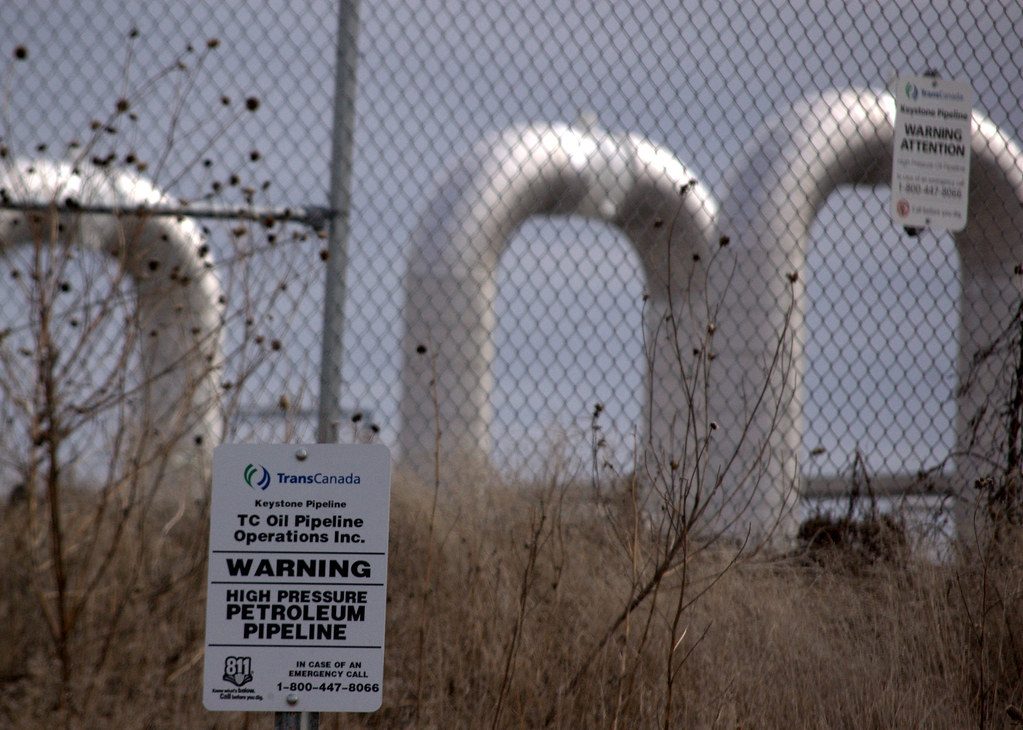
President Trump's escalating trade war with Canada has collided with an inconvenient reality for the White House: America's economy still runs, in large part, on Canadian resources. A new report circulating this week underscores just how tightly Washington and Ottawa remain bound together even as the two allies trade tariff threats and diplomatic barbs.
According to the U.S. Energy Information Administration, Canadian crude oil accounts for nearly 20 percent of total U.S. petroleum consumption, a staggering figure that complicates any talk of a clean economic break between the two nations. The same data shows Canada supplies the overwhelming majority of America's aluminum and more than 80 percent of the potash used in U.S. agriculture — a mineral critical to fertilizer production and, by extension, the nation's food supply.
The numbers have prompted pushback against President Trump's repeated assertion that the United States does not need Canada. McGill University professor Daniel Béland called that claim "absolutely false," arguing the two economies are far more interdependent than the administration's rhetoric suggests. It's a rare moment where even a Canadian academic's blunt assessment lines up with hard trade data — and BreakFirst readers deserve to see both sides of that ledger.
The White House, for its part, has defended its hardline posture by pointing to what it describes as a roughly $50 billion annual outflow from the United States to Canada. Analysts cited in reporting on the dispute note that much of that gap is driven by American purchases of Canadian energy — meaning the very trade deficit the administration cites as justification for tougher tariffs is, in significant part, a byproduct of the U.S. buying cheap, reliable Canadian oil rather than evidence of Ottawa taking advantage of Washington.
The dispute reached a boiling point last week when trade talks between the two governments collapsed. In response, Washington imposed 50 percent tariffs on roughly $20 billion worth of Canadian goods — a punishing move, though notably one that left energy imports untouched, a tacit acknowledgment from the administration itself of how essential that supply chain remains to American consumers and industry.
North of the border, the fallout has exposed divisions within Canada's own conservative movement over how hard to hit back. Alberta Premier Danielle Smith and former Alberta premier Jason Kenney are reportedly split on whether Canada should weaponize its energy exports as retaliatory leverage against Washington — a strategy that would cut both ways, given how reliant American refiners and consumers are on that same Canadian crude. The disagreement highlights the risk Ottawa faces: any attempt to squeeze U.S. energy markets could just as easily backfire on Canadian producers who depend on American buyers.
For the Trump administration, the standoff fits a broader pattern of using tariffs as a blunt instrument to force trading partners to the table, a strategy the president has deployed against adversaries and allies alike. Supporters argue that decades of lopsided trade arrangements have hollowed out American manufacturing and that a period of short-term pain is worth correcting the imbalance. Critics, including some free-market conservatives, worry that treating a close ally like Canada — a fellow NATO member and America's largest energy supplier — the same way Washington treats geopolitical rivals risks unnecessary economic self-harm, particularly for U.S. refiners and farmers who depend on Canadian crude and potash.
What happens next remains unclear. With energy exempted from the new tariffs and no indication talks will resume imminently, both governments appear to be settling in for a prolonged standoff. The coming weeks will likely test whether Alberta's oil-producing leadership can present a unified front, and whether the White House's tariff gambit forces Ottawa back to the negotiating table — or simply deepens a rift between two economies that, for all the current friction, remain deeply, perhaps inescapably, intertwined.